“Training Is Cheating”
Someone once told me, “Training is cheating,” but knowing the terrain, weather, and mileage I’m about to face, is how I’ve decided to cheat.
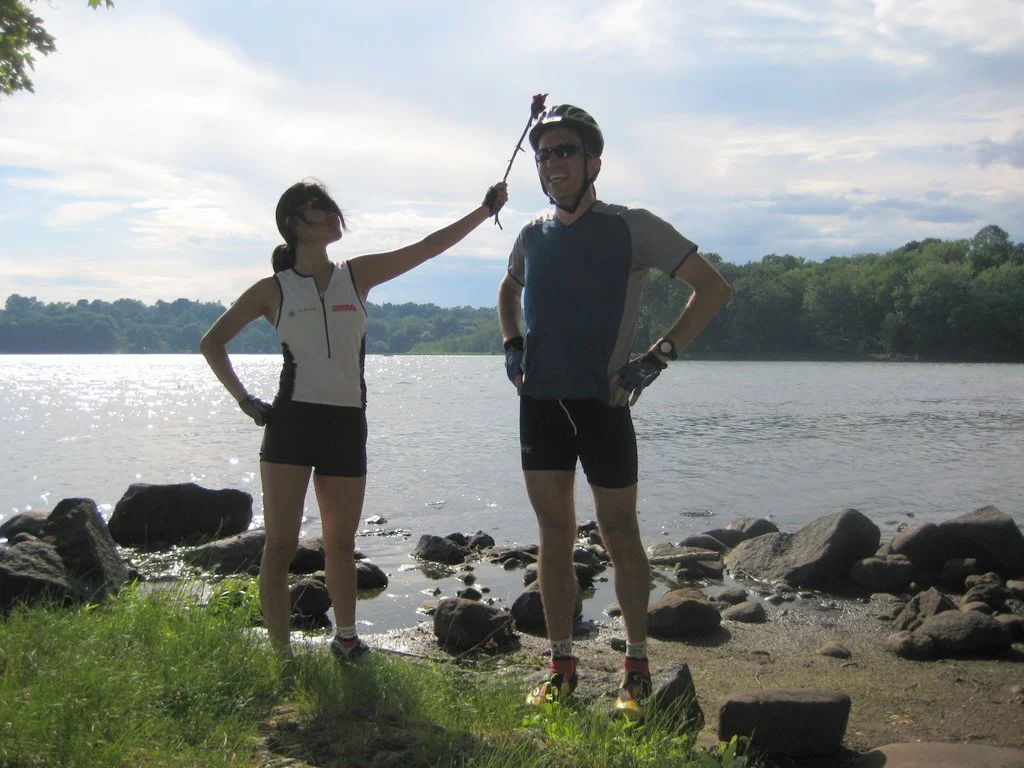
Leven and I cycling to West Point, circa the time of my second triathlon. I forgot to mention, it’s Dr. Leven since he has a PhD, not in training, fitness, or anything relevant to this discussion.
A long time ago, after I had two Olympic-distance triathlons under my belt, like any self-respecting twenty-something, I went all in for my next race and signed up for my first Ironman (IM). For the sensible (and uninitiated), an Olympic-distance triathlon totals 32 miles split between swimming, biking, and running. A full Ironman is 4.4 times as long—140.6 miles.
When I confessed my hesitation about training for something that absurd, my bestie and training buddy, Leven, said, “You don’t train. If you train, you can basically do anything. You have to go off the couch to see what your mind and body can really handle. Otherwise, it’s cheating.”
You can guess how that first IM went.

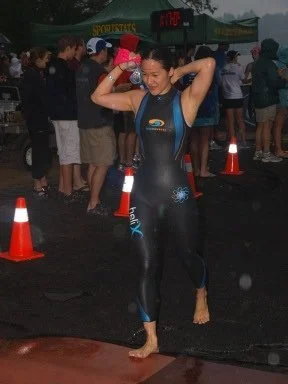
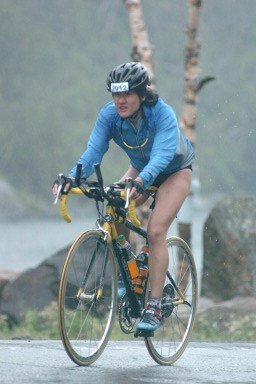
And yet, despite that experience, I’ve long embraced his philosophy. Shouldn’t we all be “race-worthy” at any moment? When I rode the first half of Route 66 in 2019, his spirit whispered, Don’t worry, it might suck—but think of the glory!
Now, as an older, wiser, and significantly more out-of-shape middle-aged mom, I’ve decided to reject his thesis and see what the other side is about. What exactly is this “training” thing—and how does one do it?
So without further ado, here’s what I’ve achieved in a few short months of preparation.
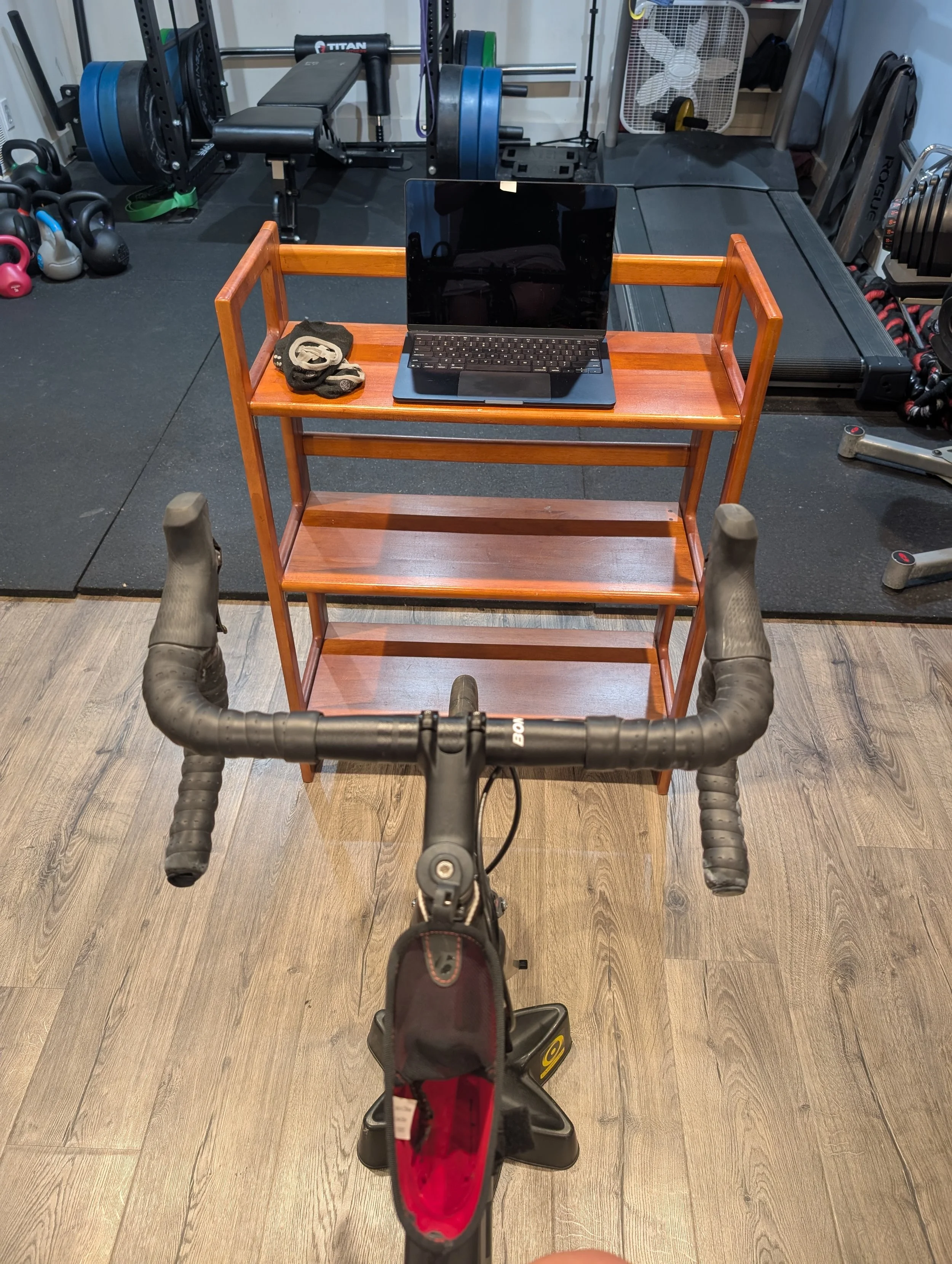
My first spin session. See what I mean about my husband’s kettlebells?!
Base Training
I spent the entire month of April in Sicily, carico di carboidrati e concentrandomi sul fitness cardiovascolare.
Translation: I ate a heroic amount of pasta and walked around sightseeing. No actual training occurred.
When I returned in May, I attempted to regain some dignity by running 5–10 miles per week and rowing 20,000–40,000 meters to build core strength and cardiovascular endurance. At the time, I was still breastfeeding baby #2, so I tried to take it easy—maintaining milk supply and preserving my pelvic floor so I don’t remain incontinent forever felt like reasonable long-term goals.
By late May, I dusted off my bike and indoor trainer and started spinning for an hour or two each week. ChatGPT tells me it’s wise to begin training 12–16 weeks before an event and to “gradually” increase endurance by 10–15 miles at a time.
ChatGPT has never cycled before.
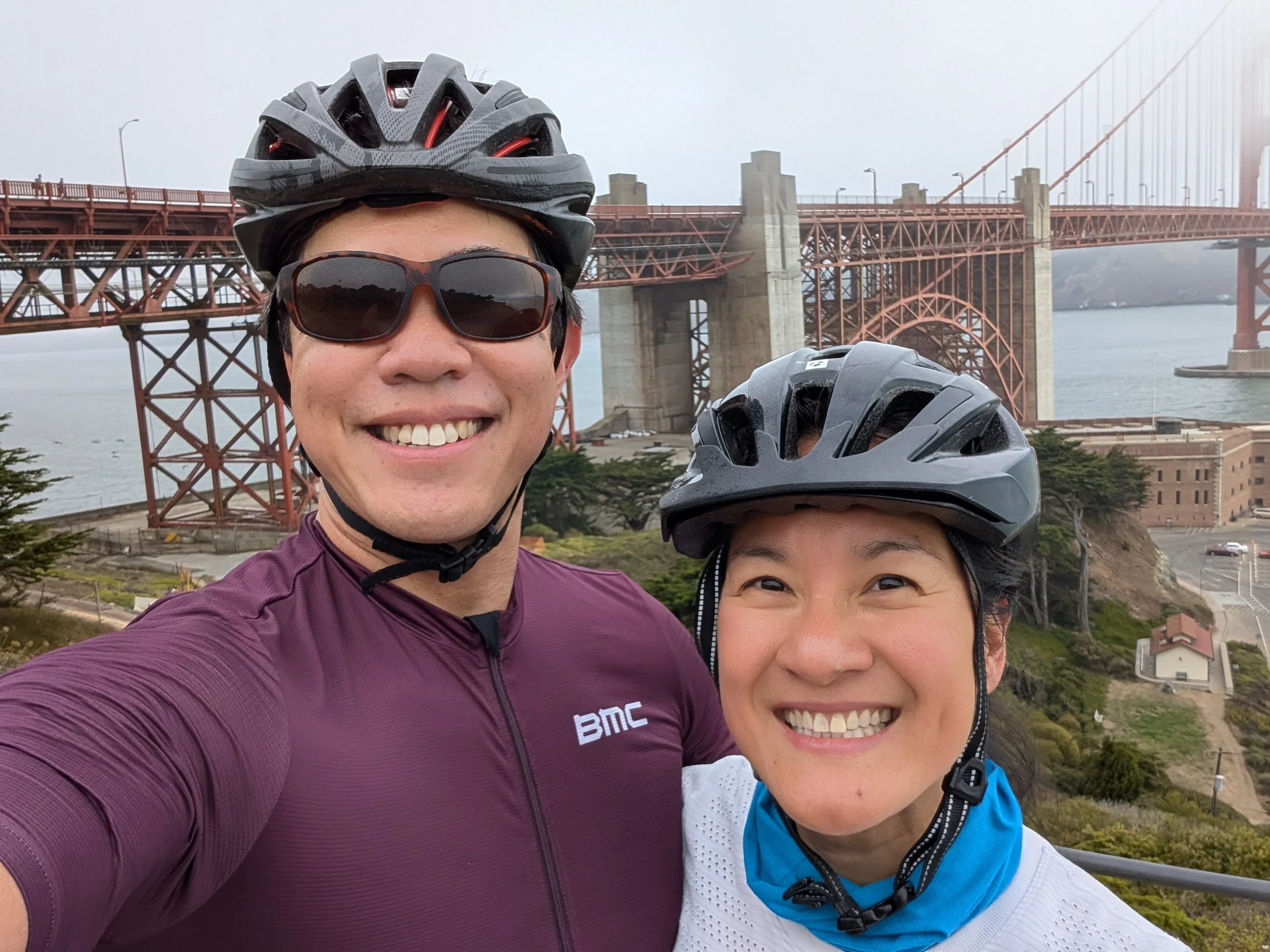
Biking buddy Nelson, who was training for the Fistful of Dirt Gravel Race in Cody, WY
Cycling
In June, I increased my spin time from 30 minutes to an hour per session and often doubled up with rowing on the same day. By mid-month, baby #2 was fully weaned, and I felt free to abuse my body with slightly less maternal guilt.
In July, I ventured outside to ride the hills around Oakland and Berkeley. My logic was simple: if I could survive 1,500 feet of climbing over six miles, surely I could manage 3,000 feet of elevation gain across 100 miles. I aimed for 12–15 hilly miles twice a week and one long, flat 40-mile ride each week.
Execution was… inconsistent.
By August, though, I’d grown more comfortable with the routes, the climbing, and the slow emergence of previously dormant leg muscles. This was the point when I felt the most dialed in—and, dare I say it, I may have even started to enjoy cycling.

Heat training buddy Katy, when she’s not cycling, she should be doing stand-up.
Cross-Training
Rowing and running remained relatively consistent. Yoga and swimming? Aspirational at best.
In August, I began punctuating longer rides with a couple of treadmill miles, just to add stress and gently stretch my endurance ceiling. I aspired to strength train, too—but despite my husband’s impressive kettlebell collection, that particular dream never materialized.
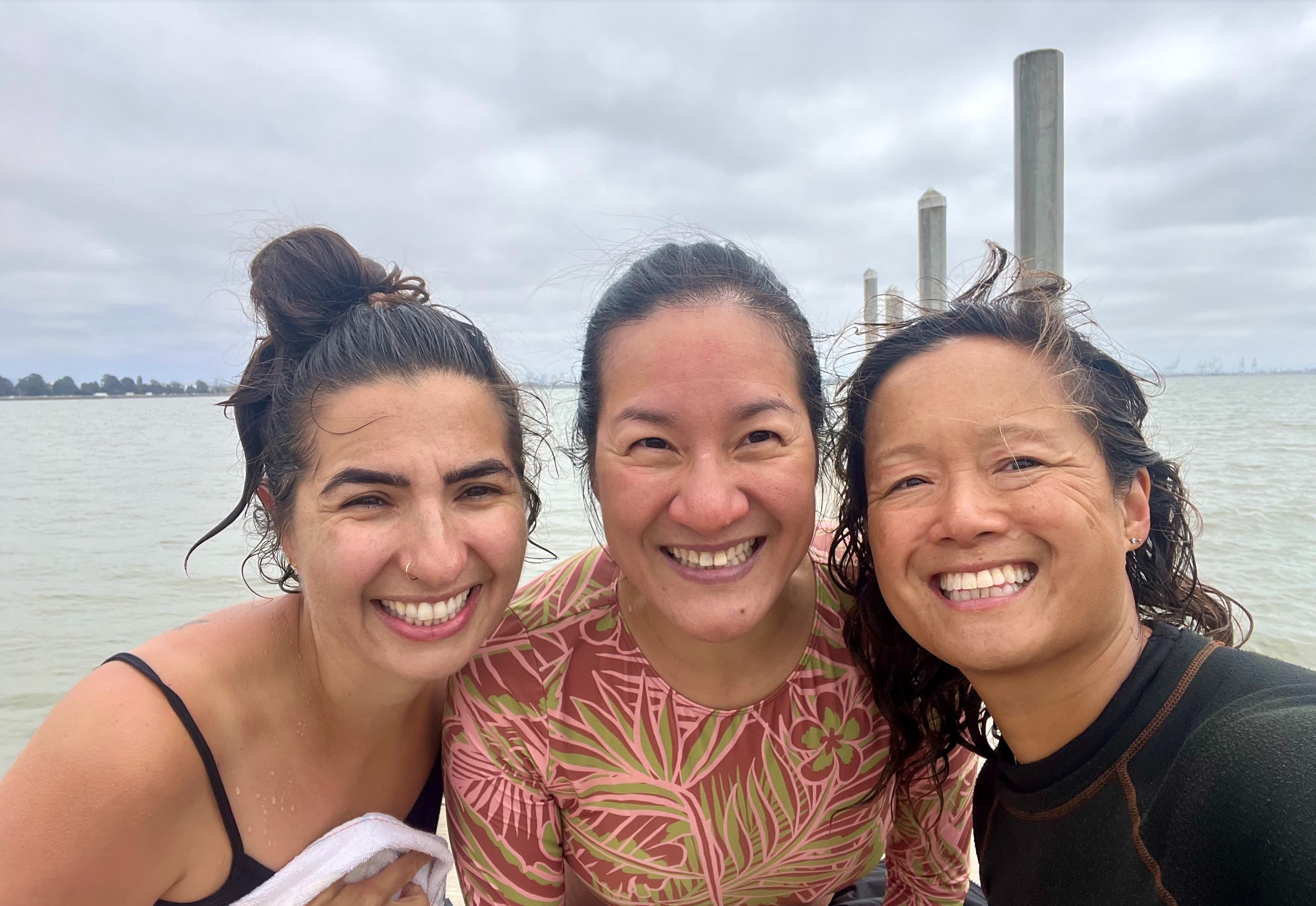
Swimming buddies Karina and Bree
The Goal
Overall, my aim is simple: to comfortably cycle 40 miles in 3–4 hours with moderate climbing. The first few days of the event will demand 50–70 miles per day, and I’m hoping my base fitness will be strong enough to muscle through the rest—heat, elevation, hills, wind, and whatever else the road throws at me.
As Leven once suggested, all triathletes should be able to do it off the couch.
But this time, I’m cheating.
And I’m okay with that.

Training is cheating; it’s a good philosophy until someone gets hurt…