Lactate Threshold Test
Let the data show what kind of cyclist I truly am...
Of the three triathlon sports, cycling is by far my weakest. During my last triathlon, my division rank dropped 12 spots from the swim to the bike portion and came back 14 spots from the bike to the run. While I feel decent in the water, I am most comfortable running. In fact, during the first leg of this ride in 2019 there were times I felt like I could just pick up my bike and run it up the hill faster than pedaling.
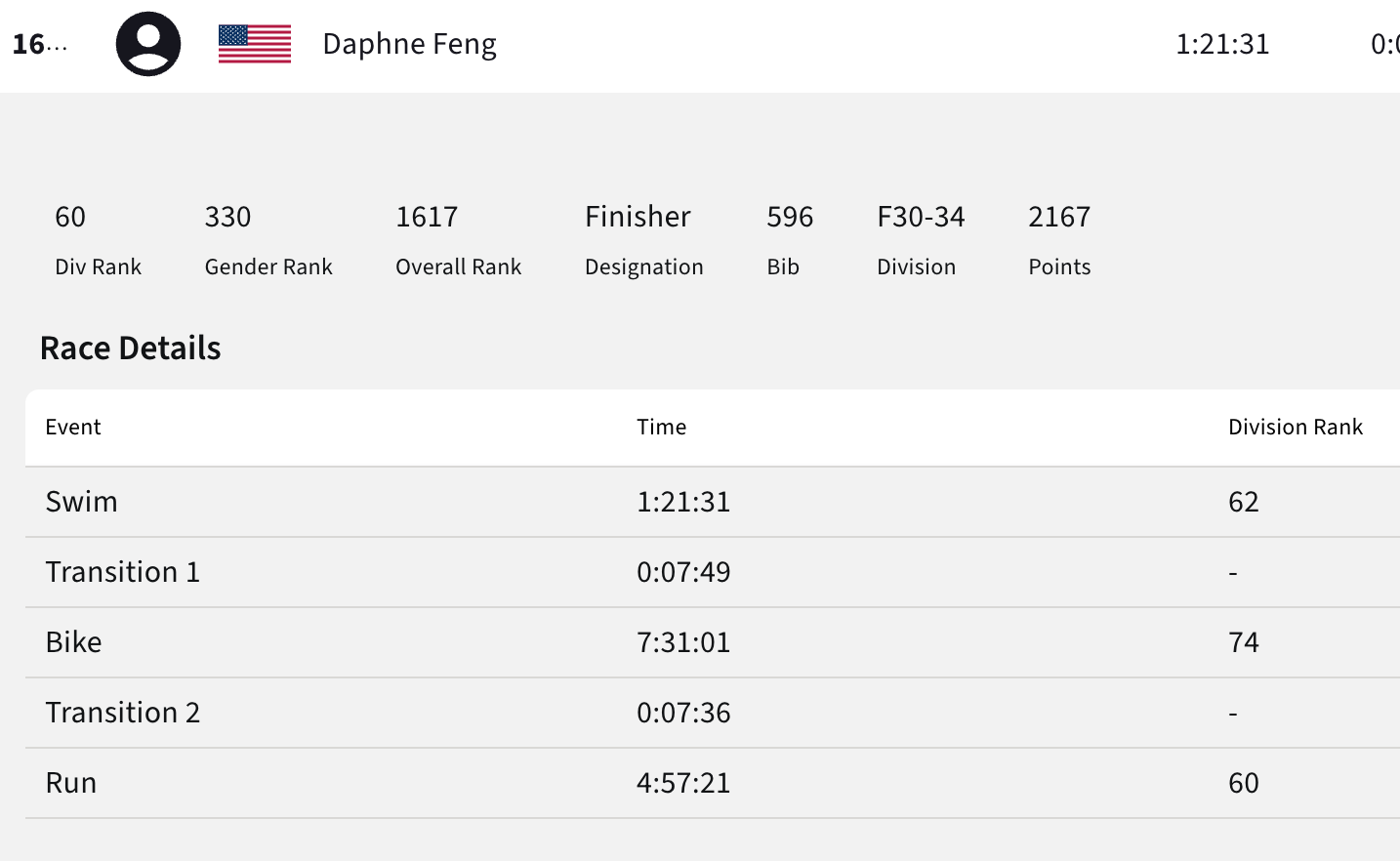
IMLP results, note there were 100 others in my division
Now, six years older, I’m a little worse for wear and I definitely have not been cycling. (Actually, does sporadically commuting 3 miles to day care on an electric cargo bike count?) I’ve decided to leverage science to help me determine where I’m at and perhaps dial in what I should do to make this little jaunt across the country less painful. So, I’ve gone to UC Davis Sports Performance and Wellness Program to get my lactate threshold assessed.
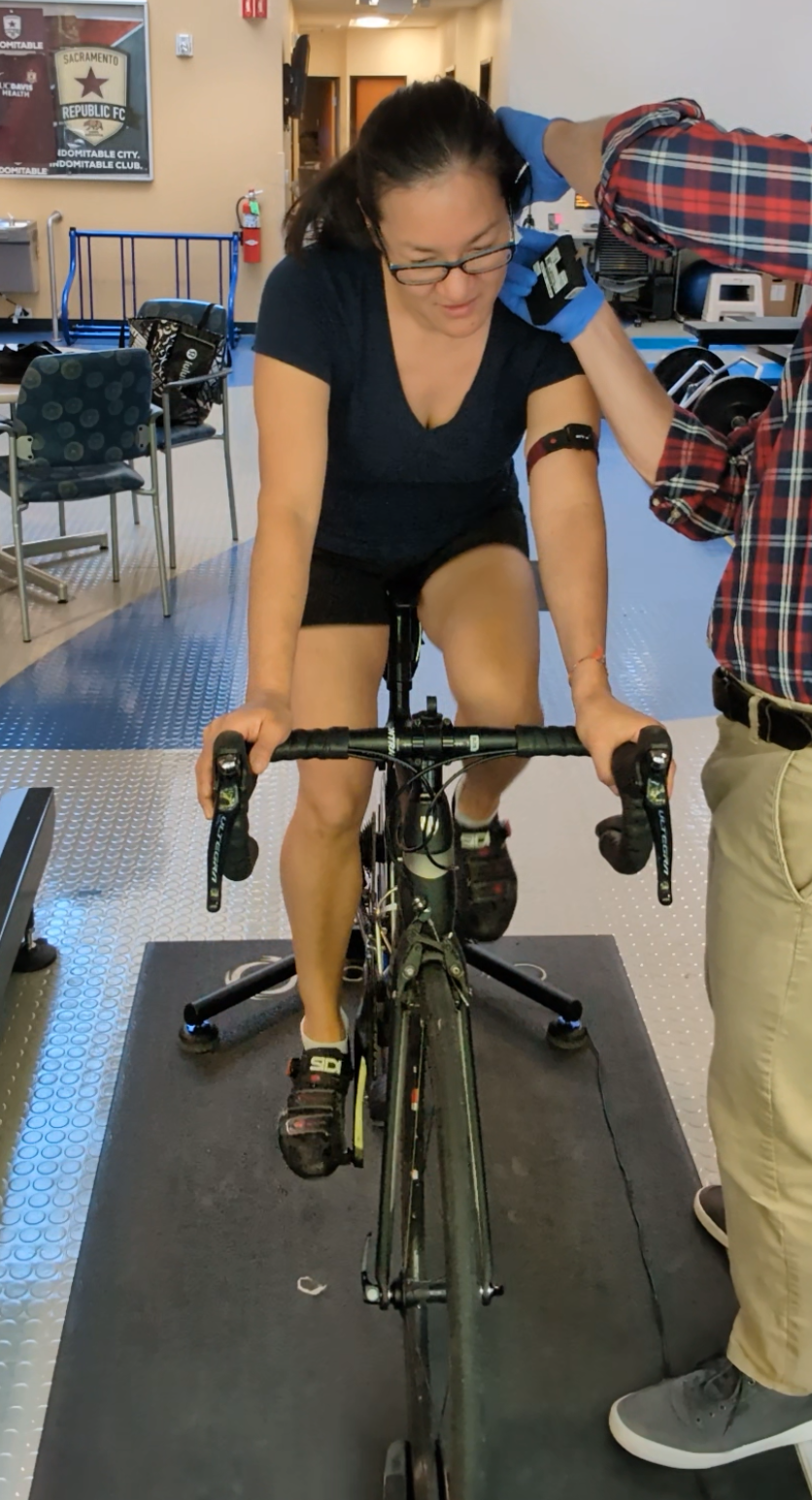
Having my ear pricked while pedaling my little heart out on the trainer…
What is a lactate threshold test? It measures the exercise intensity at which lactate (lactic acid) begins to accumulate in your blood faster than your body can clear it. This point is called the lactate (or anaerobic) threshold. The test involves gradually increasing exercise intensity on a bike or treadmill while taking small blood samples to measure lactate levels. Most athletes see their lactate threshold occur around 80-90% of maximum heart rate, though it varies significantly between individuals.
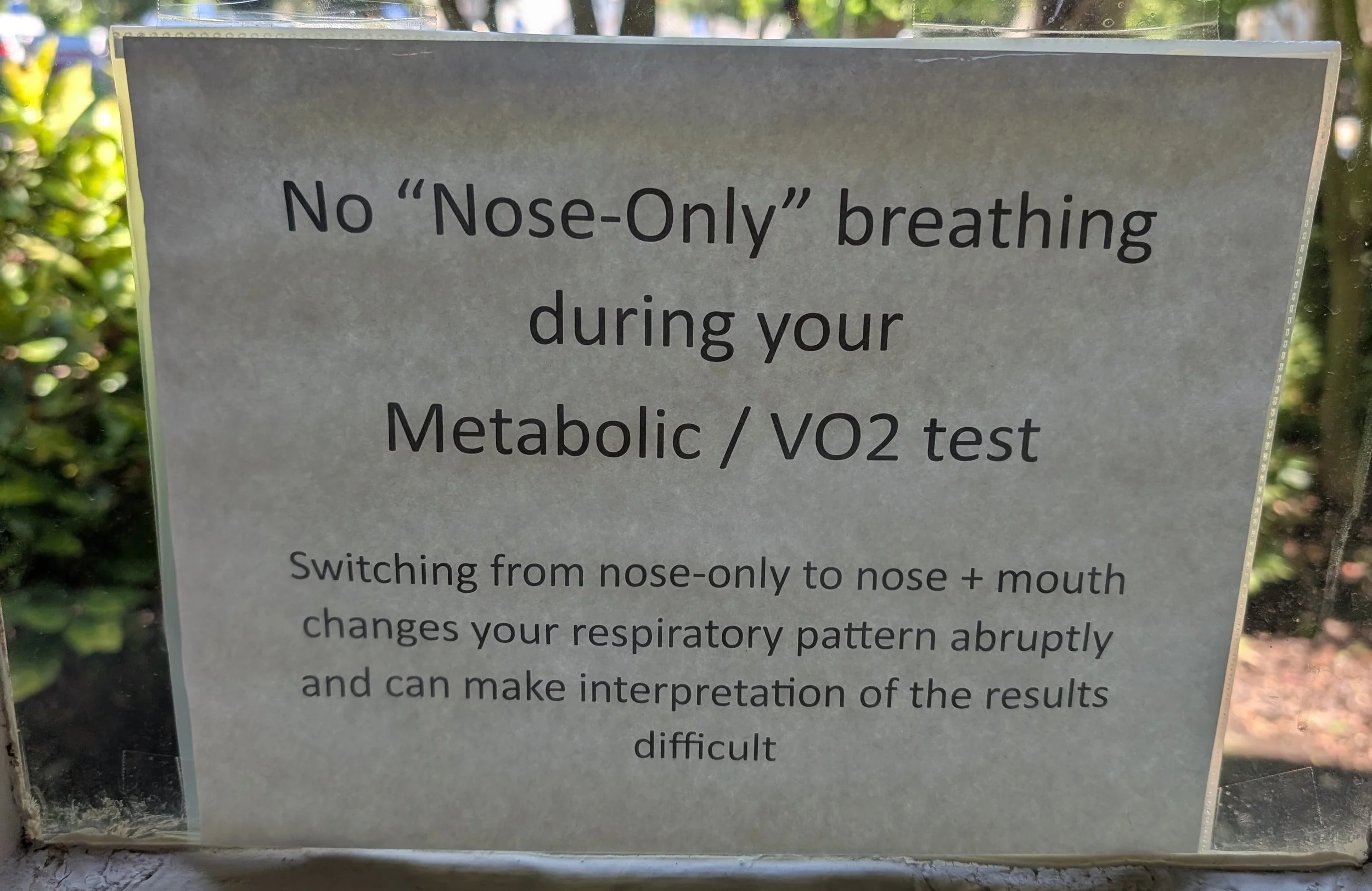
Found on the window of the testing area. Apparently some influencers recommend only breathing out of your nose while exercising. Maybe that’s what I’ve been doing wrong all these years.
Why do it? Your lactate threshold is one of the best predictors of endurance performance. Athletes with higher thresholds can sustain faster paces for longer periods. From your threshold you can calculate the maximum sustained effort an athlete can maintain without fatiguing and determine workout (heart rate, power, pace) zones. Knowing your workout zones is particularly valuable for endurance athletes where pacing and nutrition are crucial for performance. Additionally, training just below the lactate threshold improves endurance and delays fatigue. For me, this is helpful because stretches of Route 66 are now abandoned and there can be no services for 50-60 miles. It is instrumental to know what heart rate I should maintain so that I can pedal longer.

UC Davis waiting room inspiration….
The test is tailored to your specific sport and fitness so I brought my bike to the facility and hooked it up to a trainer. We started by finding my baseline, where I could bike comfortably at a low heart rate without a lot of exertion. Then every 4 minutes, a sample of my blood was taken by pricking my ear lobe, then power meter on the trainer increased by 20 watts. All the while, my heart rate was being continuously monitored. The results were very illuminating, especially for anyone considering a ride of this nature. The results, drum roll please…
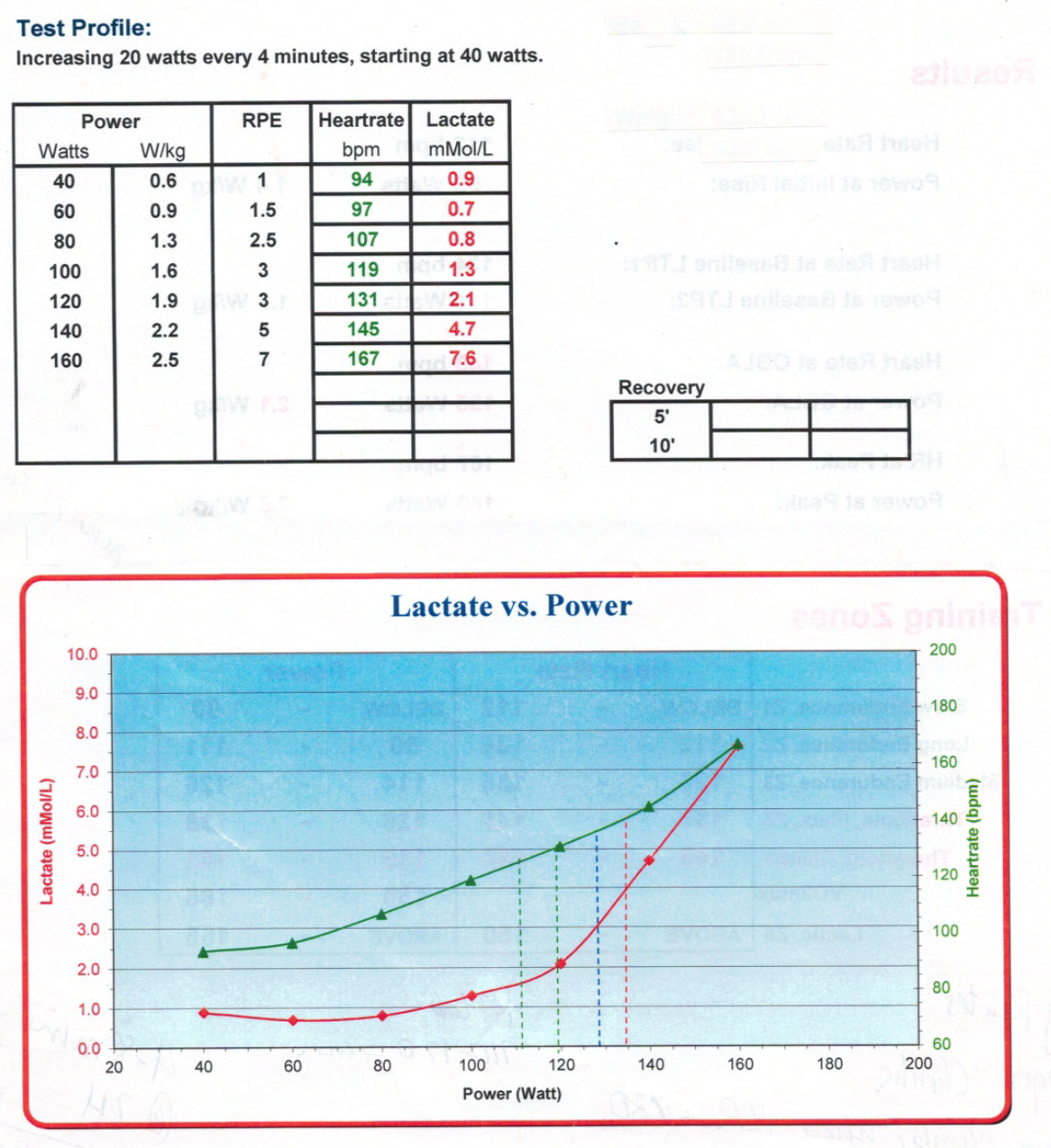
Max power of 160? Confirms how laughably bad I am at cycling, which would matter if it stopped me, but it doesn’t.
My watts were pretty low, that part I had anticipated. I maxed out at 160!* I have always found it extremely difficult to pedal uphill or on a low (harder) gear. However, I never felt like it was difficult from a heart rate perspective, just that my legs couldn’t keep pushing the pedals. My examiner, who also happened to be the head of the wellness program, concluded that I must rarely train at a high enough heart rate while cycling. True. He recommended more interval training, 4-8minutes at Zone 4 and equal time recovering. He also thought training with longer climbs where my heart rate stayed under 130 would benefit the upcoming ride, given the significant elevation I’ll encounter crossing the continental divide.
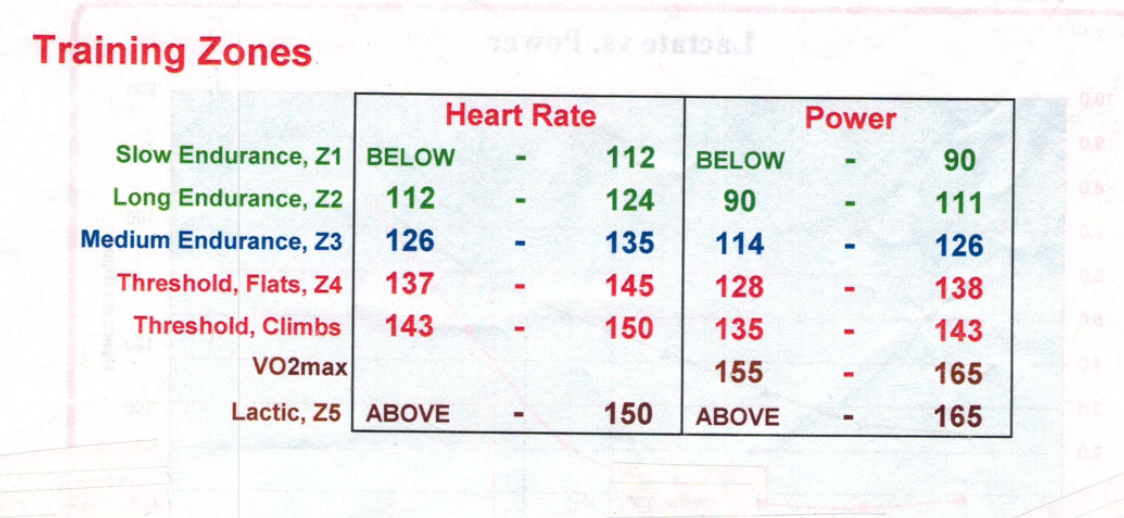
My zone 4 may be your zone 1!
What I (and you should too) find heartening about this test is it doesn’t take a professional athlete to do a trip like this. By the looks of my triathlon results, I have, at best, average athleticism, but I have big dreams. It seems like the only thing that matters is the force of will to complete the task, and a sprinkling of luck to not get injured. For me, it is important to occasionally do something you think is wildly unreasonable for your skills set, then you know where you truly stand and not where your mind tells you you stand. Maybe you’ll get better along the way too.
I’ll post a video here once I get it sorted out.
* My old cycling coach, I use that term loosely, not because he wasn’t good - he was amazing, I was not a “present” mentee. M2 used to jokingly tease me when my watts were at 140-160. I feel a deep sense of regret now that I didn’t try harder at his spin studio M2 Revolution when I had the opportunity!