Eight Days: It’s real now…
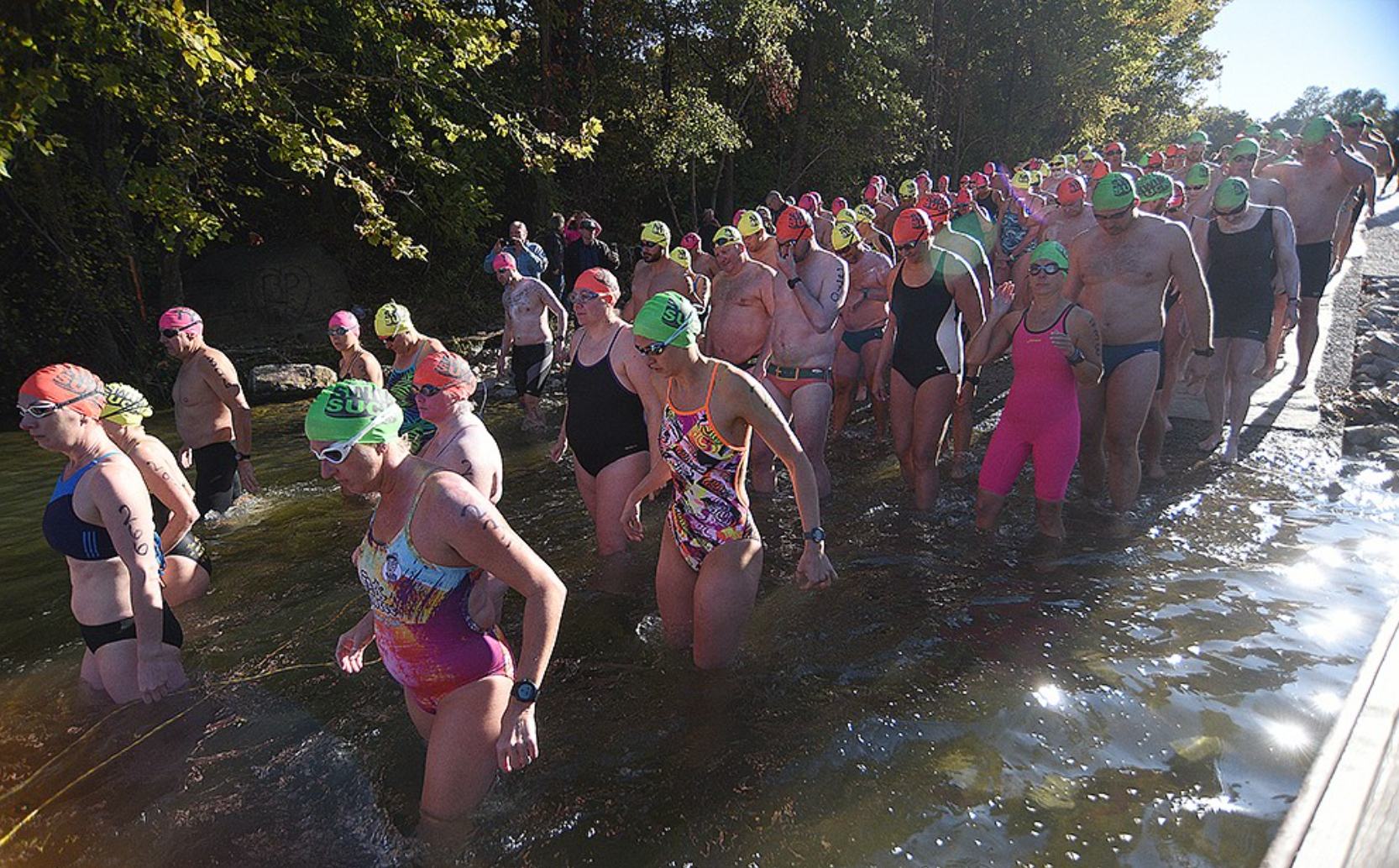
Swim the Suck start line Source: Chattanooga Free Press
Eight days from now, I'll be standing at the mouth of Suck Creek preparing to swim 10 miles through a river gorge in Tennessee. Earlier, in April when I registered, the whole thing felt abstract. Now, I have eight days to decide whether I did enough work—or not.
How do I feel right now? I can’t help but contrast this moment with when I signed up. Back then, I was all machismo and bluster. I had grand plans, AI-generated training schedules, and an endless list of weekly blog topics that I would faithfully document. I was motivated, confident, and had plenty of time.
Now? I feel a bit numb and unsure of myself. My left shoulder is nagging me, and every pool session feels like a heavier drag through the water. In April, when I visualized this moment, I imagined my last handful of training swims as cruising effortlessly for thousands of yards before fatigue even touched me. I pictured logging dozens of open-water swims, standing on the starting line overflowing with confidence, and, of course, posting dozens of videos proving I had ‘done it.’
Instead, my last post here was July 3rd, introducing the idea of this, my first marathon swim. In reality, I had already registered and been mulling it over for months, but I couldn't focus on it until I finished pacing Sara for Miwok—a post I still need to write!
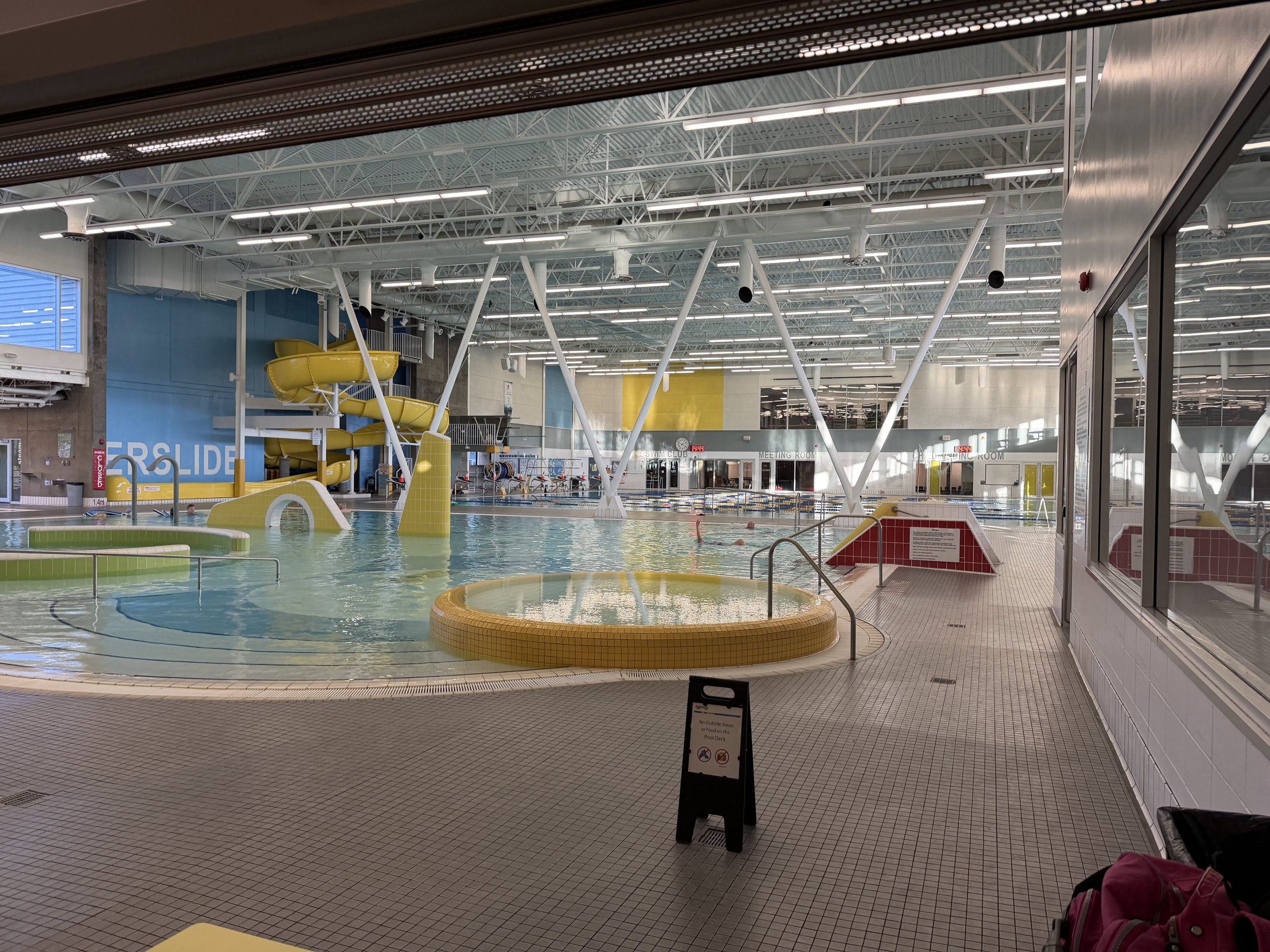
The glorious pool and community center in Penticton where I swam for a week.
Where have I been since July 3rd? On the road for six weeks—partly for work, partly for a family trip, and partly helping out a friend. While I squeezed in swims where I could, I lost three crucial base-building weeks in July. I hit the ground running in mid-August and managed to peak in late August and early September. My longest effort was a 9,200-yard pool swim—a far cry from 17,600 yards (10 miles). Beyond that, I’ve logged maybe eight open-water swims, averaging around 1,000 meters each.
So again: how am I feeling? Could I have done more? Yes. Compared to a "real" athlete, I feel ill-prepared. But on my personal scale—where my usual modus operandi is "training is cheating"—I’m practically an Olympian.
Historically, my strategy was to train to half the distance and let adrenaline and sheer willpower carry the rest. Occasionally, I’d handicap myself by binge drinking the night before. On the morning of the 2006 Paris Marathon, I violently threw up in a bathtub before hitting the start line. I only found relief in a plastic cup of du cidre from an early aid station (and later, red wine and a massage table at Mile 24). Yes, it was the worst marathon I’ve ever run, but as I staggered across the finish line near the Arc de Triomphe along the Champs Elysee, I did feel invincible.
As I get older, though, that strategy no longer serves me. I've realized that some actual preparation is necessary if I want the experience to be remotely comfortable.
Even so, I still can’t answer the core question: How do you know when you’re ready to swim ten miles? I started by asking various LLMs to calculate the true distance I’d have to swim given the downstream current, along with the estimated time it might take me. They were all wildly different, so none of it brought me any comfort.
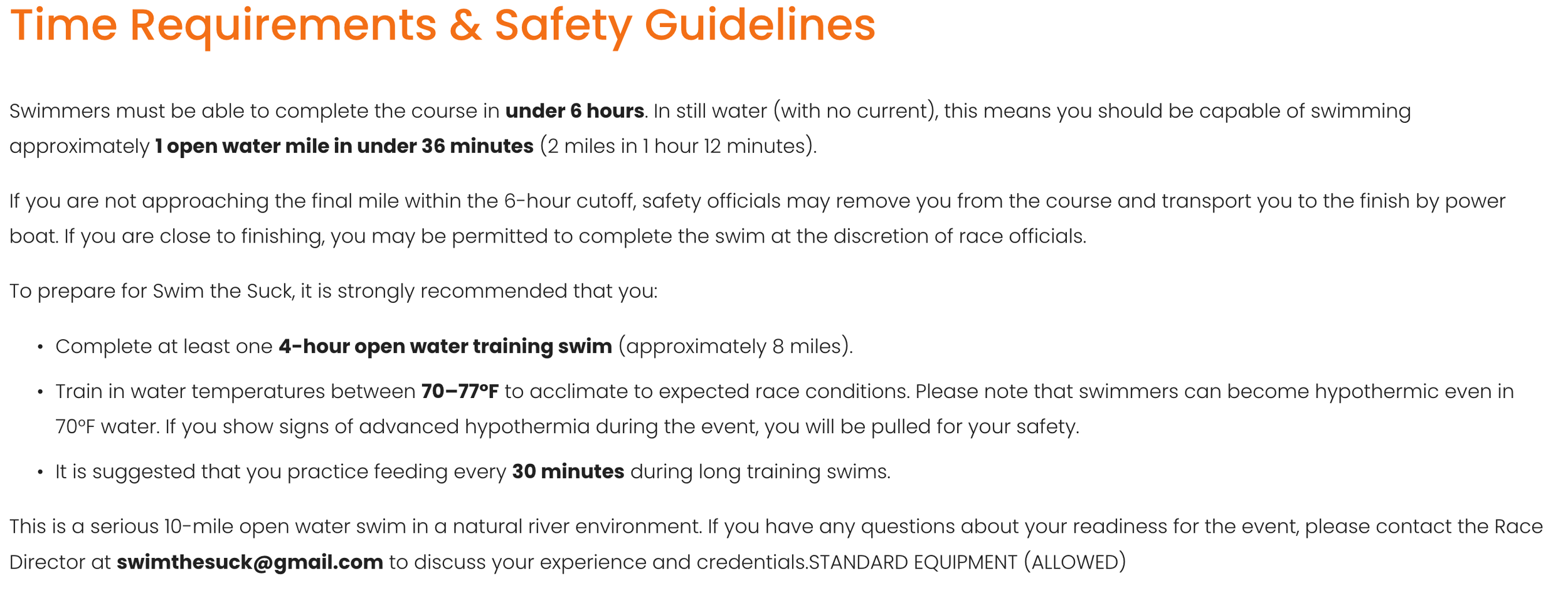
Some recommendations from the race organizers
It didn't help that I finally noticed the recommendation on the Swim the Suck site (ok, fine, it wasn't hidden in fine print): complete at least one four-hour open-water swim (~8 miles). Maybe that should have been my target?
Coulda, shoulda, woulda. I didn't log more pool yardage because, frankly, the pool is mind-numbingly boring. Even with varied workouts—paddles, fins, buoys, kickboards—crossing 11,000 yards circle swimming requires a terrifying amount of clock time and patience. And open water? Fuhgeddaboudit. The San Francisco Bay is cold, murky, and home to actual sharks. Every time I get out, my lips are blue and salt water drains out of my nose for hours.
So, can I do it?
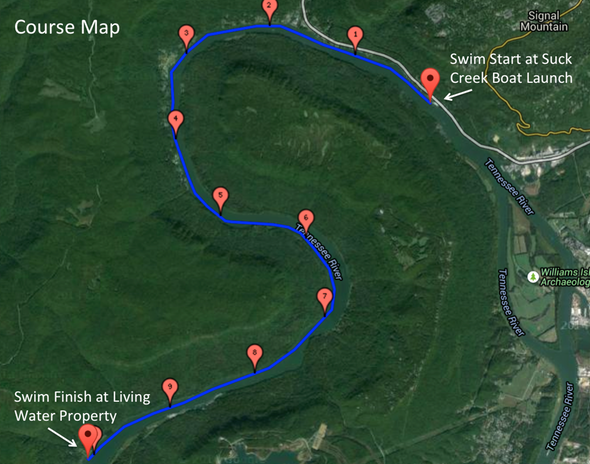
Course map Source: swimthesuck.org
It might be a miserable day, but I hope I finish! Sara will be in the kayak next to me, which is like having a warm, fuzzy teddy bear along for the ride. This race is famous for being a tandem effort between swimmer and pilot, so we will have to quickly put together some hand signals and a strategy to keep feeds under 20 seconds. We’ve only had one practice session with a kayak, and the ebb tide distracted with both of us.
The real wild card isn't the distance; it's the weather. Its supposed to rain and water temperatures are projected at 83–85°F—the warmest in the race's history. That’s hot. My local pool sits at 80°F and feels brutal during long efforts, but this comes with a major silver lining: you can't get hypothermic! Instead of worrying about shivering, my strategy hinges on staying hydrated, pacing through the heat, and trusting Sara to keep us in the meat of the river current while I keep my head down.
Eight days from now, there will be no more yardage to accumulate, no more black lines to follow, and no more ways to convince myself I’m ready. I’ll either be ready, or I won’t.
Maybe that's the magic of endurance– eventually, the preparation ends, and you find out who you are with whatever work you managed to bring to the line.
Stay tuned for the exciting conclusion of this saga!