Dexa Day!
Did you know there is a scan that tells you how much actual fat, muscle, and bone mass you're made of? Don't get one if you might be devastated by what it tells you...
What if there were an imaging machine that could scan your body and deliver a complete picture of your fat mass, lean muscle, and bone density—down to exactly where it’s distributed? Would you try it?
Yes? Of course. What athlete wouldn’t want to remove the guesswork from the effectiveness of their training regimen?
Enter the DEXA (Dual-Energy X-ray Absorptiometry) scan. At its core, a DEXA scan is a high-tech, noninvasive imaging test that maps your body composition using low-dose X-rays.
That’s how I found myself at BodySpec in San Francisco. Several places offer DEXA scans, but I chose BodySpec because it was easy to schedule—and they have a mobile service that brings the scanner closer to me in Oakland. I decided to get scanned before training began in earnest for my Route 66 ride so I could establish an accurate “before” snapshot of my body composition.
The process is simple: show up, check in, lie on the scanner for seven minutes, and you’re done. A couple of tips—don’t eat or drink excessively beforehand, and try to schedule future scans at the same time of day, following the same routine, for consistency.
The images and calculations are available almost immediately. I received mine within minutes—and if you’re not prepared, the results can be devastating.
Sidebar: I take my health and fitness seriously. I eat an incredibly healthy diet, mostly fruits and vegetables. I rarely eat processed foods. I work out five times a week, focusing on cardiovascular fitness and flexibility. I sleep consistently. Yes, I work in the wine industry—but overall, I’m disciplined about my health.
So imagine my surprise when my results came back.
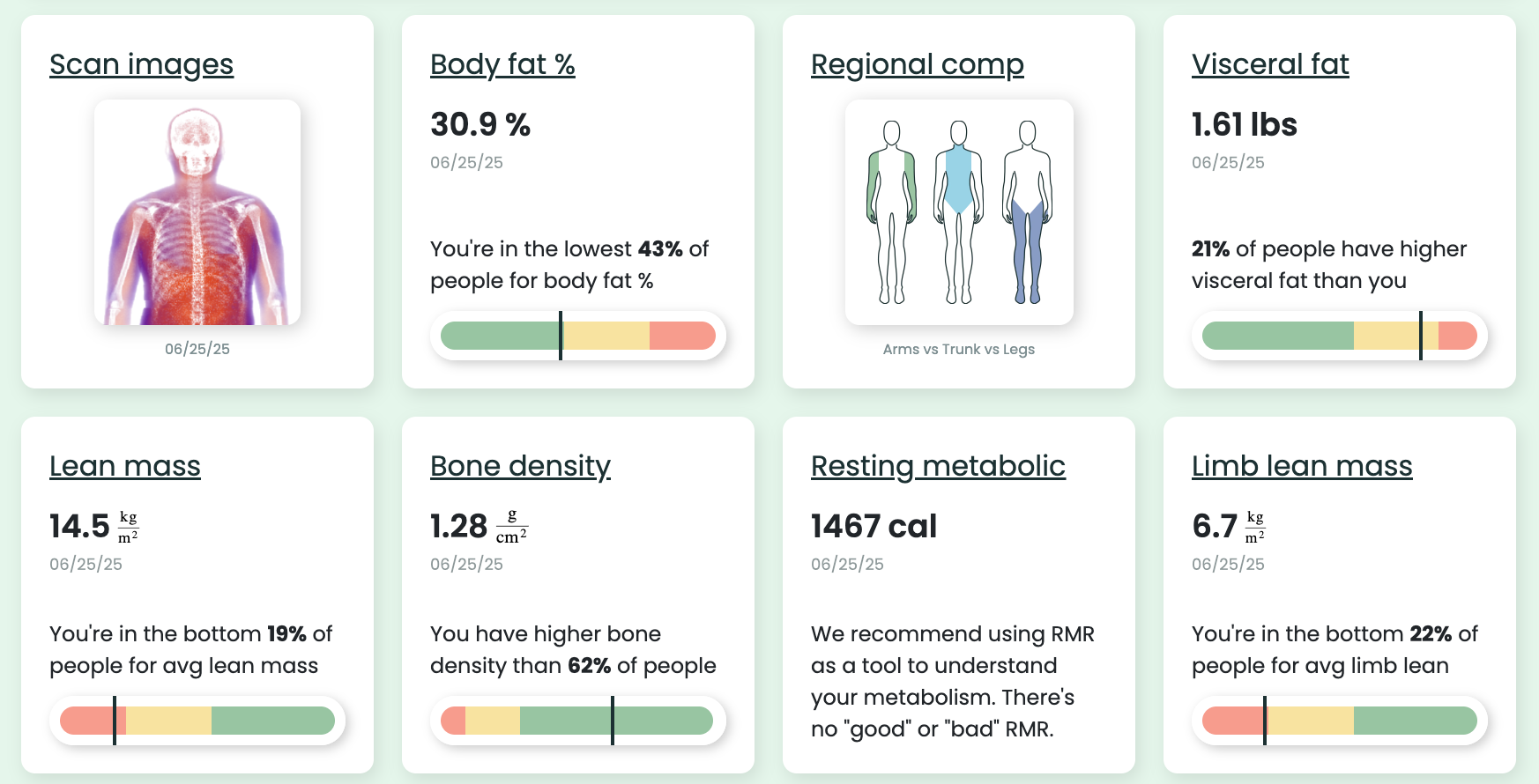
Dexa results summary from BodySpec
According to the scan, I fall into the bottom 19% of people for muscle mass—and I have high visceral fat (VF).
I’m used to being told I’m in the 99th percentile of things. Instead, my DEXA report informed me that only 21% of people have higher visceral fat than I do.
What is visceral fat, and why did this send me into a spiral?
Visceral fat is stored deep inside the abdomen, surrounding vital organs like the liver, pancreas, and intestines. Unlike the fat you can pinch, visceral fat plays a direct role in chronic inflammation and significantly increases the risk of serious health conditions, including heart disease, type 2 diabetes, stroke, and certain cancers. It secretes pro-inflammatory chemicals called cytokines, creating a low-grade, chronic inflammatory state. Over time, it can quietly damage blood vessels, organs, and cells—without obvious symptoms.
It also disrupts hormone balance, and emerging research links excess visceral fat to increased risks of depression, cognitive decline, and neurodegenerative disease.
And then there were the visuals.
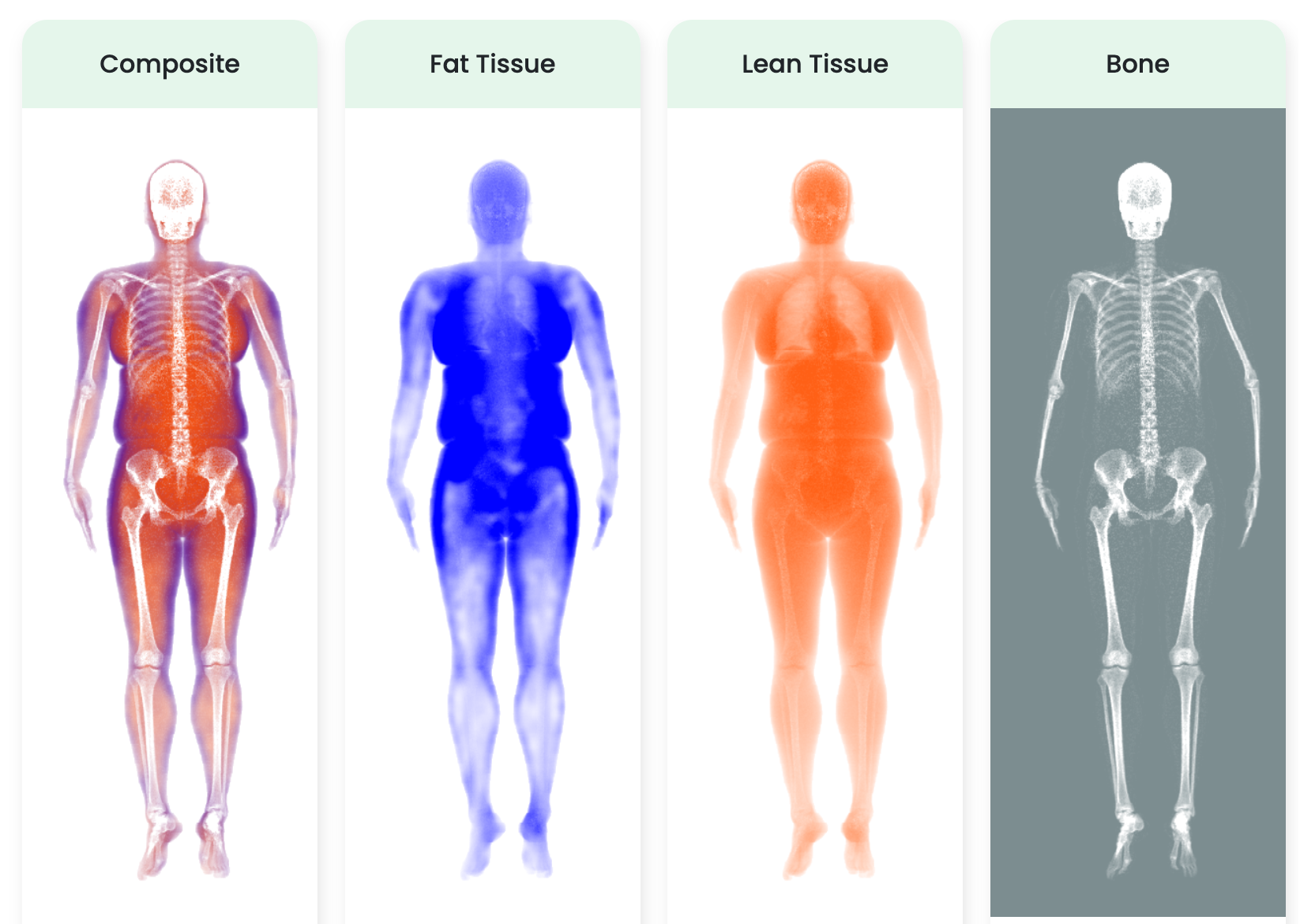
BodySpec Imaging
Most people think they’re in better shape than they actually are—and to be fair, I am pretty fit. So explain to me how I now have visual confirmation that I have not one, but two muffin tops.
All jokes aside, I’m grateful I got the scan and the early warning about my visceral fat levels. This isn’t something I could have known just by looking in the mirror or stepping on a scale. Now I have clear direction: build lean mass in my arms and torso through strength training, and reduce visceral fat through more targeted cardio, possible fasting protocols, and likely some nutritional adjustments.
Next step: meet with a trainer to craft a fitness plan that accounts for these findings—while also preparing me for the 1,200-mile bike trip ahead.